Newsletter Subscribe
Enter your email address below and subscribe to our newsletter
Enter your email address below and subscribe to our newsletter

 ByJohn A
Most guest-prep guides open with towels. That’s fine advice, but if you’re renting a place inside San Diego city limits, the first prep task isn’t cosmetic. It’s confirming you’re allowed to rent the place short-term at all. Licensing comes before linens, hazard repairs come before staging, and the turnover clean lands near the end of that order, not the start.
Inside city limits, any dwelling unit, or part of one, rented for less than a month counts as short-term residential occupancy, and the City of San Diego requires a license for it. Since May 1, 2023, operating without that license has been unlawful. That’s not a loose end you tie up after the first booking clears. Never opened the city’s short-term rental licensing rules? Start there.
Two things trip up new hosts. First, jurisdiction: plenty of homes with San Diego mailing addresses sit outside the city’s actual boundaries, and the city points owners to its Council District Map to settle that question.
Then there’s the tier system. The ordinance sets out four license tiers, from part-time rentals and home sharing to whole-home rentals and whole-home rentals in Mission Beach. One license per host, and no running more than one dwelling unit for short-term stays at a time.
See also: How Often Should You Visit a Hair Salon? A Service-by-Service Answer
Your tier decides more than a label on a form. Reporting duties split along tier lines, with Tier 3 and Tier 4 licenses carrying a quarterly reporting requirement that Tier 1 and Tier 2 hosts don’t have. Sort that out before you build the booking calendar. A whole-home rental in Mission Beach runs on a completely different paperwork rhythm than a spare room you open up a few weekends a year.
Host-community explainers help you get oriented. The San Diego Short-Term Rental Alliance publishes an overview of San Diego’s short-term rental permit tiers, and right on that page it says plainly that the information isn’t legal advice and the Alliance isn’t the official authority on the ordinance. Read it for context. Take anything specific to your address, your tier and your reporting dates to the city itself.
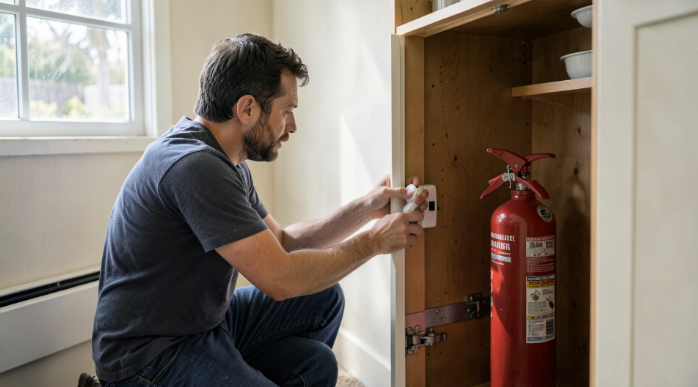
Now the physical work, and it starts with whatever could hurt someone, not whatever looks untidy. Go up the front steps and out into the yard the way a stranger would, hunting for the things you quit noticing years ago. A loose stair tread, exposed wiring: both get fixed before the listing goes live. Repairs first, decor later.
Standard safety gear for a short-term rental generally includes:
Push the test button on the detectors yourself instead of taking anyone’s word for it. Treat that list as general good practice for hosts; if you want to know what San Diego requires of your particular property, ask the city.
If you’re renting out a home you actually live in, or one you use seasonally, the pre-guest sweep matters more than the cleaning does. Jewelry, passports, birth certificates, financial paperwork, family photo albums, artwork and firearms come out of circulation before anyone checks in. A locked closet is the usual answer, and it isn’t foolproof; one widely reported case involved a guest breaking into one.
Moving the irreplaceable things off-site is safer when that’s possible. Set it up once. Whoever handles the turnover, you or a company such as Clearwater Cleaning, shouldn’t have to guess which cupboards are off limits. After that, the sweep is a short step in the turnover rather than a scramble, and some hosts keep a single lockable cabinet that stays shut through every stay so nothing needs hiding when a same-day booking lands.
The general standard is strict in two rooms: bathrooms and the kitchen need to be genuinely clean, not tidied. Beds get made with fresh linens for every stay, which means the sheets leave the room and go through a full wash between guests instead of being pulled straight.
Write the turnover down. Memory fails, particularly once the job passes to somebody else, so a repeatable checklist wins; build your own or start from a published vacation-rental cleaning checklist. Still deciding whether to keep doing turnovers yourself? Pull up a local Airbnb cleaner on the map and see whether the hours line up with your check-in windows.
Put the instructions in writing and you won’t spend the evening answering the same questions by text. Cover the appliances people genuinely struggle with: dishwasher, washing machine, thermostat, and whatever the TV remote situation is. Put the WiFi name and password somewhere visible, write out the house rules on smoking, parties, quiet hours and pets, and say where the trash and recycling go. Local emergency numbers go in too, plus the address of the nearest hospital.
Your checkout notes and your cleaner’s scope are connected, since what you ask the guest to do decides how much work the turnover takes. Handing that job to an outside cleaning company? Write both documents in one sitting so they can’t contradict each other. Somebody has to strip the beds and somebody has to take the bins out, so decide which. Then say so in both places.
The order is what keeps this manageable. Settle the licensing question first, because no amount of preparation helps a rental that shouldn’t be open for business. Then confirm what your tier asks of you, fix anything that could injure a guest, lock away what you’d hate to lose, and only then get into the deep clean and the staging.
Guest instructions come last, because they describe a property that’s already ready. Skip ahead to the cleaning and you’ll find the gaps at the worst moment, mid-stay, with a guest waiting on an answer. Before your next booking, pull up your license status and check which tier you’re under, then work down from there.